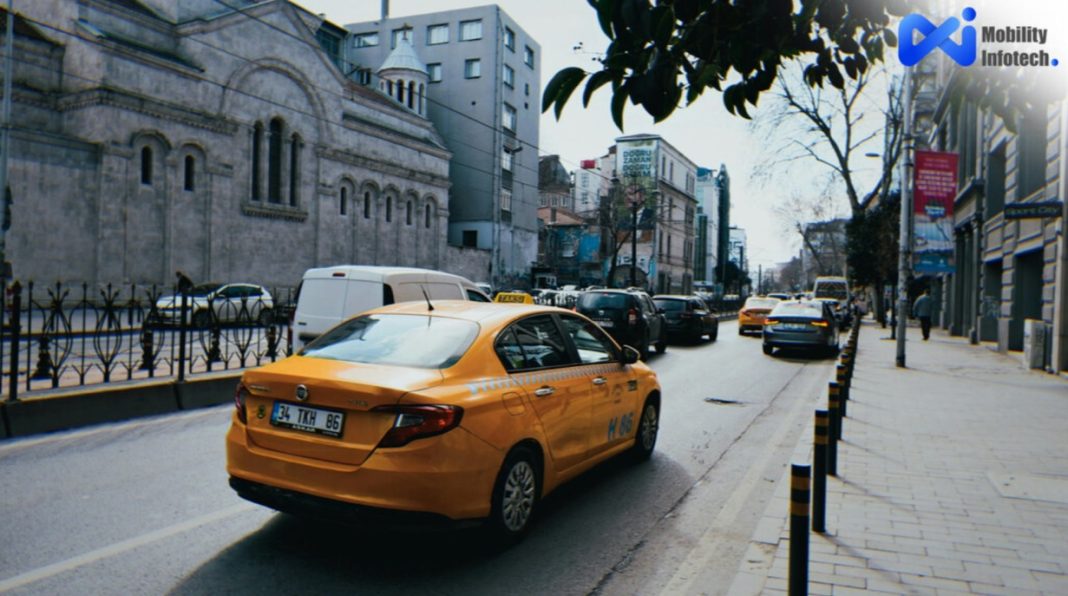
The era of simply „hailing a cab” through a basic app is behind us. In 2026, Poland’s urban mobility market has matured dramatically. What was once a straightforward digital transaction between a rider and a nearby vehicle has evolved into a high-stakes logistics operation. For fleet operators across Warsaw, Kraków, and Wrocław, the „brain” of the business, the taxi management software, has become the single most decisive factor in whether a company scales or stalls.
At Mobility Infotech, we have witnessed this transformation first-hand. Polish startups and established operators alike are no longer satisfied with a basic dispatch app. They want a predictive taxi management system that can outthink local competition and adapt to the unique rhythm of Polish cities. Here is how AI is fundamentally re-engineering the mobility landscape in Poland.
1. The Death of Reactive Dispatching
Traditional dispatching in Poland was always one step behind. A passenger in Gdańsk requested a ride, the server located the nearest available driver, and everyone hoped for the best. It was functional, but deeply flawed. Drivers sat idle in low-demand zones while passengers waited far longer than necessary.
Today’s advanced taxi management system uses Agentic AI to shift from a reactive to a fully proactive approach. Instead of waiting for a booking request to arrive, the software continuously analyzes live urban data, everything from train delays at Warszawa Centralna to sudden rain over Poznań’s Old Market Square, and repositions your fleet precisely where demand will spike in the next ten to fifteen minutes.
For Polish operators, this foresight is not a luxury. It is how you keep your drivers consistently earning, reduce driver churn, and build a reputation for reliability in a market where passengers are becoming increasingly discerning.
2. Dynamic Pricing 2.0, More Science, Less „Surge”
Early ride-hailing platforms relied on blunt surge pricing that regularly frustrated passengers in cities like Łódź and Katowice. The 2026 generation of taxi management software is far more precise and transparent. AI now manages fare adjustments by weighing thousands of real-time data points simultaneously:
- – Real-Time Traffic Conditions: Automatically adjusting rates to fairly compensate drivers for delays caused by heavy congestion on routes like the S8 or the Warsaw ring road.
- – Event-Driven Micro-Demand: Detecting crowd movements from concerts at Tauron Arena Kraków or football matches at the National Stadium, without penalising everyday commuters.
- – Green Incentives: Integrating environmental credits for passengers who specifically choose EV-equipped fleet vehicles, supporting Poland’s push toward sustainable transport.
When the AI clearly communicates the reason behind a fare adjustment to the passenger, trust is built. And in a competitive Polish market, trust is the most valuable currency a fleet operator can hold.
3. Autonomous Fleet Health, Agentic Maintenance
Every vehicle sitting in a repair shop is a direct loss to your bottom line. The latest taxi management app frameworks include integrated telematics that deliver what can best be described as Agentic Maintenance, a system that acts before problems become costly failures.
Rather than waiting for a warning light to appear on a dashboard in Wrocław or Gdańsk, the software monitors vibration patterns, engine performance, fuel efficiency, and brake wear in real time. When a potential issue is flagged, say, an early transmission irregularity, the system autonomously schedules a service appointment during the driver’s off-peak hours. Your fleet stays on the road, your drivers keep earning, and your maintenance costs drop significantly.
For Polish operators managing mixed fleets across multiple cities, this predictive approach is a game-changer that dramatically reduces unexpected downtime.
4. The Human Side of the Algorithm
A common misconception among Polish fleet owners is that more technology inevitably leads to a colder, more impersonal experience for passengers. In practice, the opposite is true. The best taxi management systems available in 2026 enable a level of hyper-personalisation that feels genuinely human:
- – Passenger Preferences: Automatically adjusting in-car temperature settings or selecting a quieter route based on a regular commuter’s past behaviour.
- – Real-Time Safety Monitoring: AI that tracks trip deviations and sends discreet alerts when a journey deviates from the expected route, providing an invisible safety net for both riders and drivers operating in busy urban environments.
- – Multilingual Support: For cities like Warsaw and Kraków that receive significant international business travellers, a modern taxi management app can deliver seamless multilingual booking experiences without any manual intervention.
5. Why Technical Authority Matters in the Polish Market
Building this level of operational intelligence is not about applying an AI label to a generic template. It requires deep expertise in geospatial mapping, real-time data processing, and scalable backend architecture tailored to the legal and infrastructure realities of the Polish transport market, including PKP rail integration and ZTM public transport corridor awareness.
This is the technical depth that separates a commodity product from a genuine competitive advantage.
Conclusion: The Road Ahead for Polish Taxi Operators
The future of the taxi industry in Poland is not simply about moving people from one point to another, it is about moving them intelligently, efficiently, and profitably. A modern taxi management software solution is no longer optional equipment for ambitious Polish fleet operators. It is the new operational baseline.
To remain competitive across Warsaw, Kraków, Wrocław, and beyond, your business needs a system that reduces waste, increases safety, builds passenger loyalty, and anticipates the demands of a fast-moving urban population.
At Mobility Infotech, we specialise in turning complex operational data into seamless, reliable rides. Our taxi management system is purpose-built for operators who want to lead the Polish market, not simply follow it.
Ready to see what the future of Polish urban mobility looks like? Let’s build it together.